
Correcting the Drift: Advanced Non-Surgical Vision Therapy for Strabismus and Amblyopia

Strabismus and amblyopia are more than cosmetic eye concerns. They are functional vision conditions that affect how the eyes and brain communicate. Strabismus, often called an eye turn or crossed eyes, happens when the eyes do not stay properly aligned. Amblyopia, often called lazy eye, occurs when the brain favors one eye, leading to reduced vision in the weaker eye.
For children and adults in Charlotte, these conditions can affect reading, depth perception, coordination, focus, and confidence. At Carolina Vision Rehabilitation, vision therapy is designed to help strengthen visual skills through a personalized, non-surgical approach.
Why Glasses Alone May Not Be Enough
Glasses can help correct blurry vision, but they do not always train the eyes to work together. With strabismus and amblyopia, the concern often involves eye teaming, focusing, tracking, and how the brain processes input from each eye.
A person may see clearly with one eye but still struggle with binocular vision, which is the ability to use both eyes as a team. This can make everyday tasks harder, especially reading, sports, schoolwork, driving, or navigating busy environments.
How Vision Therapy Helps Strabismus and Amblyopia
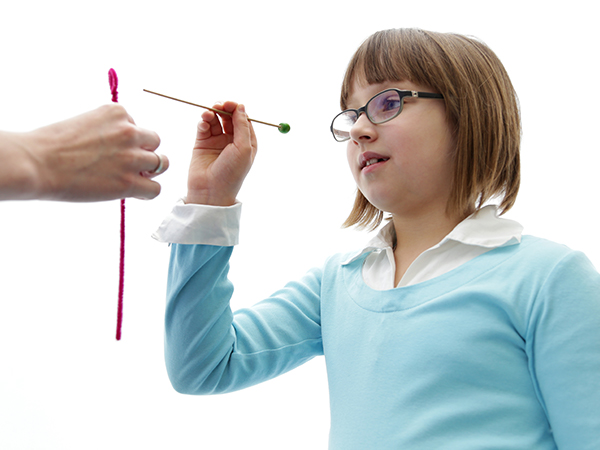
Vision therapy is a customized treatment program that uses guided activities, lenses, prisms, patches, and other tools to improve how the visual system functions. Rather than only addressing the appearance of an eye turn, therapy focuses on building stronger communication between the eyes and brain.
For strabismus, vision therapy may help improve alignment, eye teaming, and depth perception. For amblyopia, therapy may help stimulate the weaker eye while encouraging the brain to use both eyes together more effectively. Each plan is based on the patient’s diagnosis, age, symptoms, and visual goals.
Signs Vision Therapy May Be Needed
A functional vision evaluation may be helpful if you or your child experiences:
- One eye turning in, out, up, or down
- Covering or closing one eye to see better
- Poor depth perception or frequent clumsiness
- Difficulty reading, tracking, or staying focused
- Headaches, eye strain, or double vision
- Avoidance of schoolwork, sports, or visually demanding tasks
These symptoms can be easy to miss, especially when a standard eye chart screening appears normal.
A Personalized, Non-Surgical Path Forward
Every case of strabismus and amblyopia is different. Some patients need support with eye alignment, while others need help improving visual processing, tracking, or focusing stamina. We provide individualized vision therapy programs to help patients build the skills needed for more comfortable, efficient vision.
If strabismus or amblyopia is affecting comfort, confidence, or daily performance, schedule a consultation with Carolina Vision Rehabilitation to learn more about vision therapy. Visit our office in Charlotte, North Carolina, or call (980) 613-0919 to book an appointment today.
Quick Links
Helpful Articles
article_category: large animal
article_category: cosmetic
article_category: preventative
article_category: general
article_category: conditions
article_category: FAQ & tips
article_category: cats
article_category: exotic
article_category: vision therapy
article_category: aesthetics
article_category: dogs
article_category: restorative
article_category: psychiatry
article_category: health
[]
article_category: cosmetic
article_category: preventative
article_category: general
article_category: conditions
article_category: FAQ & tips
article_category: cats
article_category: exotic
article_category: vision therapy
article_category: aesthetics
article_category: dogs
article_category: restorative
article_category: psychiatry
article_category: health
[]
Flowbite is an open-source library of interactive components built on top of Tailwind CSS including buttons, dropdowns, modals, navbars, and more.
Check out this guide to learn how to get started and start developing websites even faster with components on top of Tailwind CSS.
All Eye Care Services
Find personalized eye care excellence with our specialized services. From quality care to advanced technology, trust us for all your vision needs.

Keep In Touch
For non-urgent questions or to learn more about our services, contact us today!
Quick Links
Contact Info
Hours of Operation
- Monday 8:00am - 5:00pm
- Tuesday 8:00am - 5:00pm
- Wednesday 8:00am - 5:00pm
- Thursday 8:00am - 5:00pm
- Friday 8:00am - 1:00pm
- Saturday Closed
- Sunday Closed
- Monday
- Tuesday
- Wednesday
- Thursday
- Friday
- Saturday
- Sunday
- Monday
- Tuesday
- Wednesday
- Thursday
- Friday
- Saturday
- Sunday
© 2026 Carolina Vision Rehabilitation. All rights Reserved -
Accessibility Statement
-
Privacy Policy
-
Sitemap
Managed and Designed by 