
Recognizing Eye Coordination Issues in Children with ADHD or Autism

When a child has ADHD or autism, challenges with attention, reading, coordination, or behavior are often viewed through a developmental or learning lens. However, eye coordination issues can also play a role in how a child processes the world around them. A child may have 20/20 eyesight and still struggle with how their eyes work together, track across a page, or send information to the brain.
For families in Charlotte, recognizing these functional vision concerns can be an important step in understanding why a child may avoid reading, lose focus quickly, or seem visually overwhelmed.
How Eye Coordination Affects Learning and Behavior
Eye coordination refers to how well both eyes work as a team. When the eyes do not align, focus, or move together efficiently, the brain has to work harder to process visual information. This can lead to fatigue, frustration, and difficulty staying engaged with schoolwork or everyday tasks.
For children with ADHD or autism, these visual challenges may add to existing sensory, attention, or learning difficulties. In some cases, what looks like distractibility may actually be visual discomfort or trouble keeping the eyes focused.
Signs Your Child May Have a Functional Vision Problem
Eye coordination issues are not always obvious, especially because many children do not know how to explain what they are experiencing. Parents may notice changes in reading, posture, attention, or motor skills.
Common signs may include:
- Losing place while reading
- Skipping words or lines
- Avoiding homework or close-up tasks
- Covering one eye or tilting the head
- Complaining of headaches or tired eyes
- Poor hand-eye coordination
- Difficulty copying from the board
- Sensitivity to busy visual environments
These signs do not automatically mean a child has a vision problem, but they are worth discussing with a provider who understands functional vision.
Why Standard Vision Screenings May Miss The Issue
Many school and pediatric vision screenings check how clearly a child can see at a distance. While this is helpful, it does not fully evaluate eye teaming, focusing, tracking, or visual processing. A child may pass a basic vision screening and still struggle with the visual skills needed for reading, writing, sports, and classroom learning.
A functional vision exam looks deeper at how the eyes and brain work together. This can be especially helpful for children with ADHD, autism, reading challenges, or ongoing frustration with visual tasks.
How Vision Therapy May Help
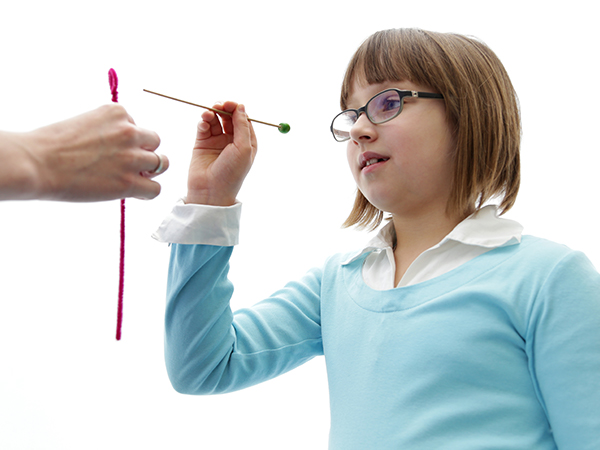
Vision therapy is a doctor-supervised program designed to improve visual skills such as eye teaming, tracking, focusing, and visual processing. At Carolina Vision Rehabilitation, care is customized to each child’s needs, with the goal of helping the eyes and brain work together more efficiently.
For some children, vision therapy may support better comfort with reading, improved visual attention, and greater confidence in school or daily activities. It is not a treatment for ADHD or autism, but it may help reduce visual barriers that can make learning and behavior challenges harder to manage.
When to Schedule a Functional Vision Exam
If your child has ADHD or autism and continues to struggle with reading, focus, coordination, or visual overwhelm, a functional vision evaluation may provide helpful answers. Early recognition can make it easier to understand whether eye coordination issues are contributing to your child’s challenges.
Schedule a functional vision exam with Carolina Vision Rehabilitation to see if vision issues may be affecting your child’s learning and comfort. Visit our office in Charlotte, North Carolina, or call (980) 613-0919 to book an appointment today.
Quick Links
Helpful Articles
article_category: large animal
article_category: cosmetic
article_category: preventative
article_category: general
article_category: conditions
article_category: FAQ & tips
article_category: cats
article_category: exotic
article_category: vision therapy
article_category: aesthetics
article_category: dogs
article_category: restorative
article_category: psychiatry
article_category: health
[]
article_category: cosmetic
article_category: preventative
article_category: general
article_category: conditions
article_category: FAQ & tips
article_category: cats
article_category: exotic
article_category: vision therapy
article_category: aesthetics
article_category: dogs
article_category: restorative
article_category: psychiatry
article_category: health
[]
Flowbite is an open-source library of interactive components built on top of Tailwind CSS including buttons, dropdowns, modals, navbars, and more.
Check out this guide to learn how to get started and start developing websites even faster with components on top of Tailwind CSS.
All Eye Care Services
Find personalized eye care excellence with our specialized services. From quality care to advanced technology, trust us for all your vision needs.

Keep In Touch
For non-urgent questions or to learn more about our services, contact us today!
Quick Links
Contact Info
Hours of Operation
- Monday 8:00am - 5:00pm
- Tuesday 8:00am - 5:00pm
- Wednesday 8:00am - 5:00pm
- Thursday 8:00am - 5:00pm
- Friday 8:00am - 1:00pm
- Saturday Closed
- Sunday Closed
- Monday
- Tuesday
- Wednesday
- Thursday
- Friday
- Saturday
- Sunday
- Monday
- Tuesday
- Wednesday
- Thursday
- Friday
- Saturday
- Sunday
© 2026 Carolina Vision Rehabilitation. All rights Reserved -
Accessibility Statement
-
Privacy Policy
-
Sitemap
Managed and Designed by 